Description
This flaky vegan pie crust recipe offers a perfect buttery and tender base for all your pie baking needs. Made without any animal products, it uses chilled vegan butter and a touch of apple cider vinegar mixed with non-dairy milk to replicate the classic buttermilk effect, resulting in a light, flaky crust that holds up well as a single bottom crust or a double crust for filled pies. The crust can be prepared with a food processor or by hand, chilled, rolled, and either blind-baked or filled and baked, making it versatile for sweet or savory pies.
Ingredients
Scale
Vegan Pie Crust Ingredients
- 80 ml non-dairy milk (chilled)
- 1 teaspoon apple cider vinegar
- 320 g plain flour
- 235 g vegan block butter (chilled, cut into cubes)
- 1 teaspoon sea salt
- 2 tablespoons vegan butter (for glazing)
- 1 tablespoon granulated sugar (optional, for sprinkling)
Instructions
- Make the vegan buttermilk: Combine the chilled non-dairy milk and apple cider vinegar in a bowl. Place in the freezer for 10-15 minutes until icy cold to mimic the tanginess and acidity of traditional buttermilk.
- Prepare the pie tin: Lightly grease a 9-inch pie tin with oil or vegan butter and dust it with flour, then knock off the excess flour so the surface is lightly coated. Optionally, add a round of parchment paper to the base for easier removal.
- Make the dough using a food processor: Add flour and sea salt to the food processor and pulse until evenly mixed. Add chilled vegan butter cubes and pulse until the mixture is roughly combined but still has some pea-sized lumps of butter.
- Add cold vegan buttermilk: Slowly pour the icy vegan buttermilk into the food processor while pulsing for about 5-10 seconds only, to just bring the dough together without overmixing.
- Shape and chill the dough: Turn out the dough onto a lightly floured surface and shape gently into a large disc. Wrap tightly in plastic wrap and refrigerate for at least 1 hour to chill and firm up.
- Alternative hand method: Mix flour and salt in a bowl. Rub cold butter cubes into the flour using fingertips until texture resembles coarse crumbs. Gradually add vegan buttermilk in two parts, gently bringing dough together by hand without overworking. Form dough into two discs, wrap, and chill at least 1 hour.
- Preheat oven: Set oven to fan 190°C (374°F) or conventional 210°C (410°F). Place an aluminum tray or baking sheet inside to preheat.
- Roll out dough: Remove chilled dough from fridge and let stand 5 minutes at room temperature. Divide if making top and bottom crusts. Roll out dough on lightly floured surface to 1/8 inch thickness. Fold and roll the dough 3-4 times, dusting with flour as needed for flaky layers. Final roll should be slightly larger than your pie tin.
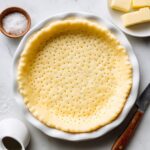
- Fit dough into pie tin: Gently lift rolled dough with your rolling pin and place into the pie tin. Press into base and sides without stretching. Trim the excess with scissors and crimp edges with a fork. Pierce holes in the base to prevent bubbling.
- For a topped pie: Roll out second dough disc, add your pie filling, and top with second crust. Trim and crimp edges. Melt vegan butter and brush over top crust, sprinkle with sugar. Bake as your pie recipe directs.
- Blind-bake crust: Cut parchment paper circle larger than pie tin. Scrunch and place on dough, fill with pie weights or dried beans/lentils. Bake on preheated tray for 20 minutes. Remove weights and paper, bake another 15-20 minutes until golden. Cool fully before removing from tin.
- Storage: Freeze uncooked dough in airtight container for up to 3 months; thaw overnight in fridge before use. Refrigerate wrapped dough up to 3 days prior to baking.
Notes
- This recipe yields enough dough for a 9-inch double pie crust; reduce to ¾ for a single bottom crust if preferred.
- Do not overmix dough to keep it flaky; lumps of butter are beneficial.
- Use chilled ingredients to maintain butter’s integrity and optimal flakiness.
- Blind-baking is recommended for pies with fillings that do not require baking.
- Rolling and folding dough multiple times creates layers for a flakier finished crust.
- Optional sugar glaze adds a subtle sweetness and shine to top crusts for sweet pies.
- Pie weights can be replaced with dried beans, rice, or lentils if necessary.
- Rest and chill times are important to hydrate flour and firm dough, improving texture.