
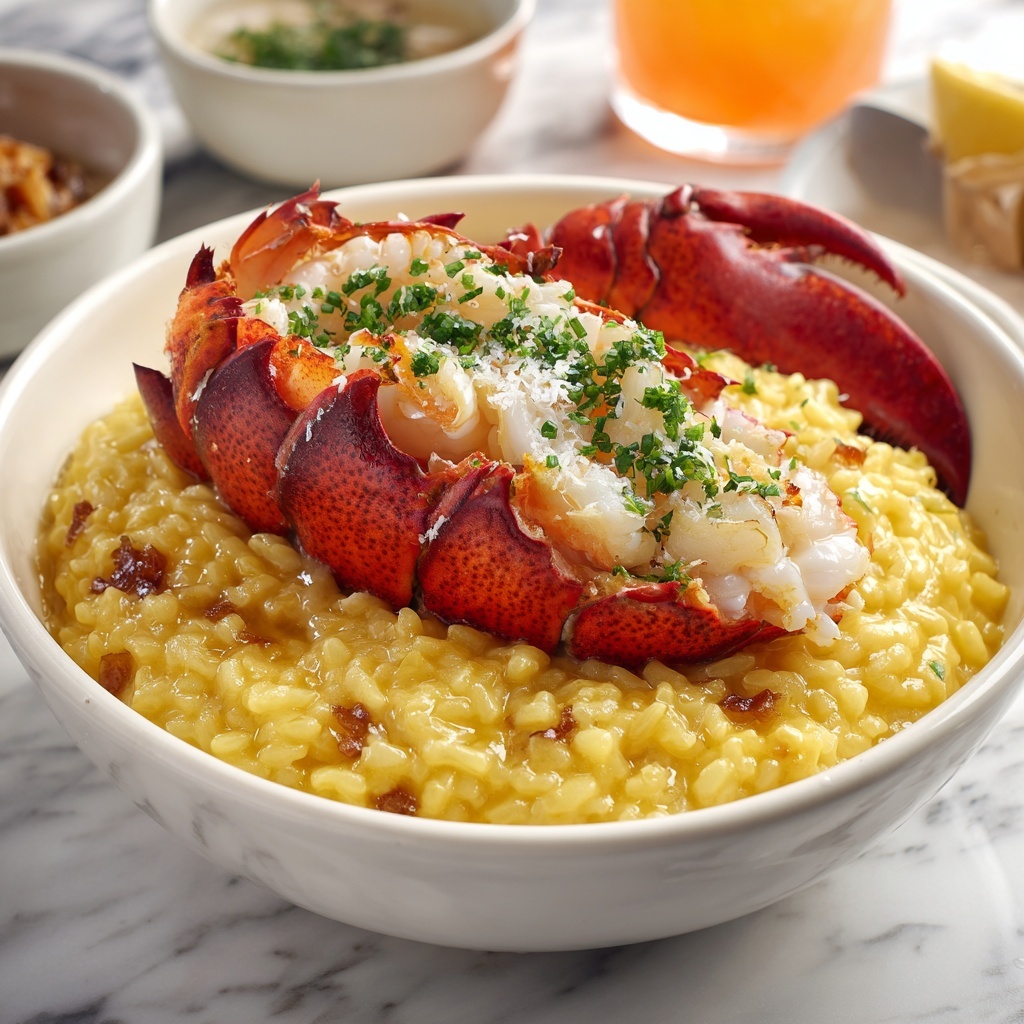
Ready to impress your friends or just treat yourself to an unforgettable meal? This Butter Poached Lobster Risotto Recipe brings together the rich, buttery tenderness of lobster with the creamy, comforting texture of classic risotto. Each bite bursts with flavor—from the delicate seafood to the cheesy finish—making it the perfect dish when you want to elevate dinner to something truly special.
Ingredients You’ll Need
While this dish may seem indulgent, the ingredient list is refreshingly simple and each component plays a crucial role in building layers of flavor, texture, and color.
- Lobster Tails (2, about 5–6 oz each): The star of the dish, bringing that sweet, succulent seafood essence.
- Unsalted Butter (1/2 cup for poaching, 2 tbsp for finishing): Adds richness and helps create that silky texture.
- Olive Oil (1 tablespoon): Provides a subtle fruity base for sautéing aromatics.
- Small Shallot (finely chopped): Introduces gentle sweetness and depth to the risotto.
- Garlic Clove (minced): Lends a punch of savory aroma without overpowering.
- Arborio Rice (1 cup): The essential risotto grain known for its creamy consistency.
- Dry White Wine (1/2 cup): Brightens the dish with a crisp acidity.
- Seafood or Chicken Stock (4 cups, warmed): Slowly absorbed to build that luscious creaminess.
- Grated Parmesan Cheese (1/2 cup): Adds a nutty, savory finish that ties everything together.
- Salt and Pepper (to taste): Simple seasonings to elevate all the flavors.
- Fresh Parsley (1 tbsp, chopped): For a burst of color and a fresh herbal note at the end.
- Lemon Zest (optional): A bright garnish that complements the richness beautifully.
How to Make Butter Poached Lobster Risotto Recipe
Step 1: Poach the Lobster Tails
Begin by gently melting 1/2 cup of unsalted butter over low heat. When it’s foamy yet not browned, submerge the lobster tails and poach them slowly for about 5 to 6 minutes. You’ll know they’re done when the flesh turns opaque and tender. Remove the tails and set aside to cool for a bit before chopping into bite-sized pieces. Don’t toss out that luscious poaching butter—it’s liquid gold and will add incredible richness to your risotto later.
Step 2: Prepare the Risotto Base
Heat olive oil in a large skillet over medium heat then add the finely chopped shallots and minced garlic. Cook until fragrant and soft, about two minutes—this aroma is your signal we’re off to a great start. Stir in the Arborio rice and let it toast for a minute or two; this step adds a subtle nuttiness and helps the rice absorb the liquids evenly.
Step 3: Deglaze and Add Stock Gradually
Pour in the dry white wine and stir until the liquid has mostly evaporated, infusing the rice with a gentle acidity that balances the creamy texture. Now, add warmed stock in small increments, about half a cup at a time. Patience is key here—stir continuously, waiting for each addition to be absorbed before adding more. This slow absorption releases the starch, creating that signature creamy risotto texture over 18 to 20 minutes.
Step 4: Combine Lobster and Finishing Touches
When your rice is just perfectly al dente, gently fold in the chopped lobster meat along with the reserved poaching butter. Stir in the grated Parmesan and the finishing butter, coating every grain in a rich, velvety embrace. Season thoughtfully with salt and pepper, then remove from heat. Cover the pan and let it rest for a couple of minutes to meld all those flavors beautifully.
How to Serve Butter Poached Lobster Risotto Recipe

Garnishes
A sprinkle of freshly chopped parsley adds a pop of bright green color and fresh herbaceousness to the creamy plate. For a little extra zing, grate some lemon zest over the top—it cuts through the richness with a lively citrus hint that feels like sunshine on your fork.
Side Dishes
Keep things simple with a crisp green salad dressed lightly in lemon vinaigrette or perhaps some roasted asparagus spears. The freshness of these sides balances the luxurious risotto perfectly without competing for attention.
Creative Ways to Present
Serve your Butter Poached Lobster Risotto Recipe in beautiful shallow bowls to showcase its creamy texture. For an elegant touch, garnish with a whole lobster claw or half a tail on top. You can even drizzle a little extra seasoned butter around the edges for a restaurant-quality presentation that will wow your guests.
Make Ahead and Storage
Storing Leftovers
If you have any leftovers, place them in an airtight container and refrigerate for up to two days. The risotto may thicken as it cools, so be prepared to loosen it slightly when reheating.
Freezing
Freezing risotto is generally not recommended as it can affect the creamy texture. If you do freeze, use an airtight container, and consume it within one month for best results. Thaw slowly in the fridge before reheating.
Reheating
To bring your leftover risotto back to life, heat it gently on the stovetop with a splash of broth or water. Stir frequently, adding liquid as needed to recreate that luscious creaminess. Avoid rushing this step, as gentle reheating preserves the delicate lobster pieces and overall flavor.
FAQs
Can I substitute the lobster with other seafood?
Absolutely! If lobster isn’t available or is too pricey, you can use shrimp or scallops. Just be mindful of cooking times since they tend to cook faster and saltiness levels may vary.
Do I have to use white wine?
While white wine adds a wonderful acidity to balance the richness, you can substitute with an equal amount of additional stock or a splash of lemon juice if preferred.
Why is slow stirring important when making risotto?
Slow, steady stirring helps release the starches from the Arborio rice, creating that iconic creamy texture. Rushing or skipping stirring can leave your risotto undercooked or dry.
Can I prepare this dish ahead for a dinner party?
This Butter Poached Lobster Risotto Recipe is best served fresh to enjoy its creamy texture and delicate lobster flavor. However, you can prepare components like the lobster tails and stock ahead, then assemble the risotto just before serving.
How do I know when the risotto is done?
The rice should be creamy yet firm to the bite, often referred to as “al dente.” It shouldn’t be mushy or crunchy. Taste testing during cooking is the best way to tell.
Final Thoughts
If you want to treat yourself or impress loved ones with a dish that sings with buttery richness and sublime seafood flavors, this Butter Poached Lobster Risotto Recipe is your go-to. It’s a beautiful balance of simple ingredients and well-loved techniques that manage to feel luxurious without fuss. Don’t hesitate to dive in and make this gourmet delight—it might just become one of your favorite special-occasion meals.
Print
Butter Poached Lobster Risotto Recipe
- Prep Time: 15 minutes
- Cook Time: 30 minutes
- Total Time: 45 minutes
- Yield: 4 servings
- Category: Main Course
- Method: Stovetop
- Cuisine: Italian-American
- Diet: Pescatarian
Description
Butter Poached Lobster Risotto is a luxurious and creamy Italian-American main course featuring tender lobster tails gently poached in butter, then combined with perfectly cooked Arborio rice and Parmesan cheese. This rich and flavorful dish is ideal for gourmet dinners, offering a decadent seafood experience with a silky, velvety texture and a hint of fresh parsley and lemon zest for brightness.
Ingredients
For the Lobster
- 2 lobster tails (about 5–6 oz each)
- 1/2 cup unsalted butter (for poaching)
For the Risotto
- 1 tablespoon olive oil
- 1 small shallot (finely chopped)
- 1 garlic clove (minced)
- 1 cup Arborio rice
- 1/2 cup dry white wine
- 4 cups seafood or chicken stock (warmed)
- 1/2 cup grated Parmesan cheese
- 2 tablespoons unsalted butter (for finishing)
- Salt and pepper to taste
For Garnish
- 1 tablespoon fresh parsley (chopped)
- Lemon zest (optional)
Instructions
- Poach the Lobster: Melt 1/2 cup unsalted butter over low heat in a saucepan until it becomes foamy but does not brown. Add the lobster tails and gently poach them for 5–6 minutes until they turn opaque and are cooked through. Remove the lobster from the butter and let cool slightly before chopping into bite-sized pieces. Reserve the poaching butter for later use.
- Sauté Aromatics: In a large skillet, heat 1 tablespoon of olive oil over medium heat. Add the finely chopped shallot and minced garlic, cooking for about 2 minutes until they become soft and fragrant.
- Toast the Rice: Stir in 1 cup of Arborio rice with the shallots and garlic. Toast the rice for 1–2 minutes to lightly coat the grains and enhance flavor.
- Deglaze with Wine: Pour in 1/2 cup of dry white wine and stir continuously until the liquid is mostly absorbed by the rice.
- Cook the Risotto: Gradually add the warmed seafood or chicken stock, about 1/2 cup at a time. Stir constantly and allow each addition to absorb fully before adding more. Continue this process for 18–20 minutes, until the rice is creamy and cooked to al dente texture.
- Combine Lobster and Finish: Stir in the chopped lobster meat, reserved poaching butter, 1/2 cup grated Parmesan, and 2 tablespoons of unsalted butter. Season the mixture with salt and pepper to taste.
- Rest and Garnish: Remove the skillet from heat, cover, and let the risotto rest for 2 minutes to meld flavors and thicken slightly. Serve warm, garnished with fresh chopped parsley and optional lemon zest for a bright finish.
Notes
- For a richer flavor, simmer lobster shells in your stock before using it in the risotto.
- You can substitute shrimp or scallops if lobster is unavailable or to vary the seafood.
- Do not rush the risotto; slow, constant stirring ensures a creamy, luscious texture.